FC Barcelona
B2英文40 張卡片
想要更多內容、語言和功能,請從 App Store 或 Google Play 下載行動 App。
On October 22, 1899, Hans Gamper published an ad in a newspaper looking for players to found FC Barcelona.
1899年10月22日,漢斯·甘伯在報紙上刊登了一則廣告,尋找球員成立巴塞隆納足球俱樂部。
FC Barcelona was founded on November 29, 1899, by a group of Swiss, English, and Catalan footballers.
巴塞隆納足球俱樂部於1899年11月29日由一群瑞士、英國和加泰隆尼亞的足球運動員創立。
Joan Gamper, the founder of the club, was also one of its first players.
瓊·甘伯,俱樂部的創始人,也是其首批球員之一。
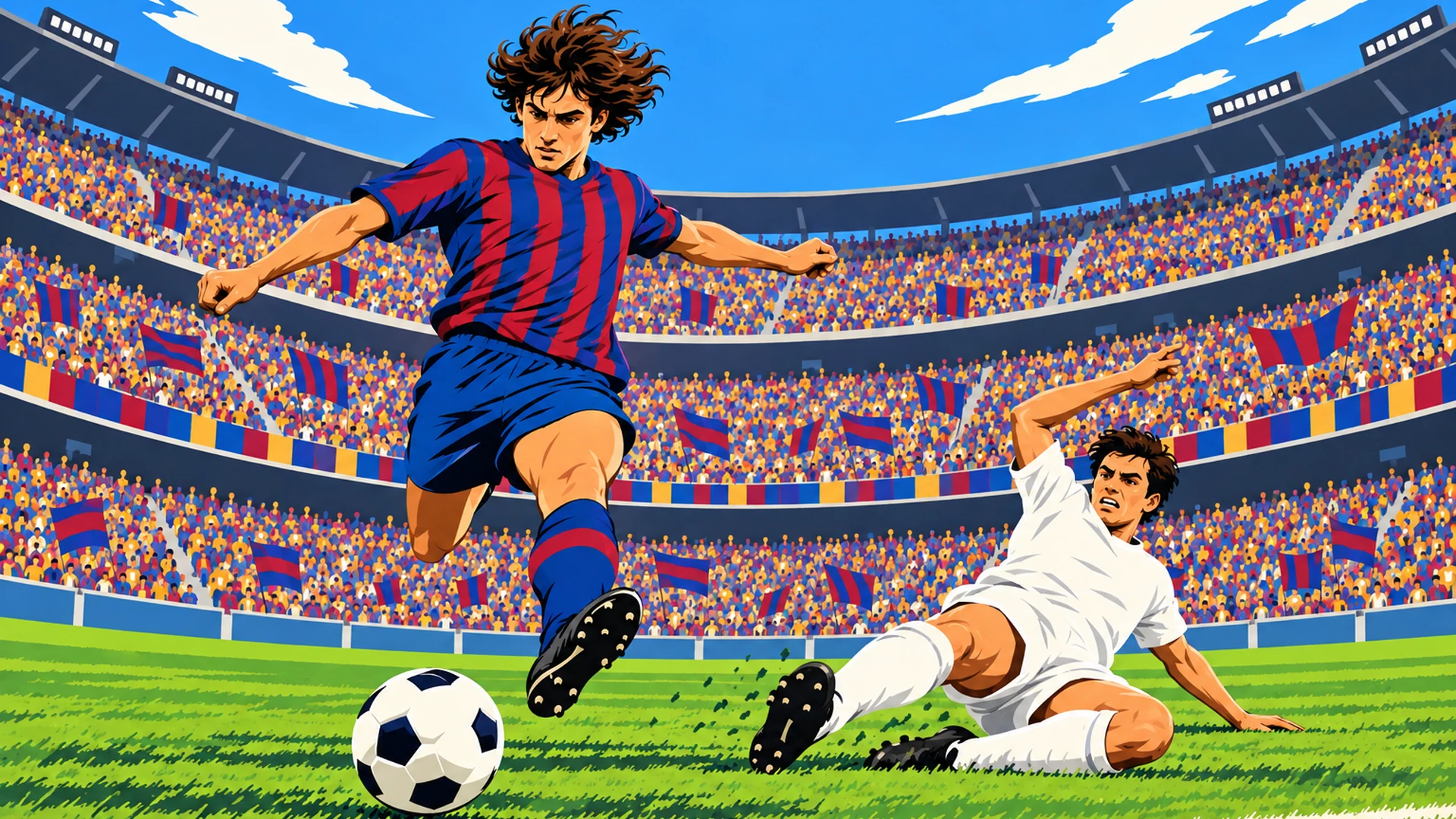
The team's blue and garnet colours have been a symbol since the early days of the club.
球隊的藍色和石榴紅色一直是俱樂部早期以來的象徵。
The club's motto is 'More than a club,' reflecting its cultural and social importance in Catalonia.
俱樂部的座右銘是「超越俱樂部」,反映了其在加泰隆尼亞的文化和社會重要性。
Barcelona's crest includes the Catalan flag, a cross, and a football.
巴塞隆納的徽章包括加泰隆尼亞旗幟、一個十字和一個足球。
On May 20, 1922, FC Barcelona inaugurated its first own stadium, the Camp de Les Corts.
1922年5月20日,巴塞隆納足球俱樂部啟用了自己的第一個體育場,坎普·德·萊斯·科爾茨。
In 1936, during the Spanish Civil War, FC Barcelona's president, Josep Sunyol, was executed by Francoist forces.
1936年,在西班牙內戰期間,巴塞隆納俱樂部主席何塞普·蘇尼奧爾被佛朗哥勢力殺害。
During Franco's dictatorship, FC Barcelona became a symbol of Catalan identity and cultural resistance.
在佛朗哥獨裁時期,巴塞隆納足球俱樂部成為加泰隆尼亞身份和文化抵抗的象徵。
The Camp Nou stadium was inaugurated in 1957 and is one of the largest stadiums in Europe.
諾坎普球場於1957年落成,是歐洲最大的體育場之一。
Camp Nou has been the site of political events, such as demonstrations in support of Catalan independence.
諾坎普球場曾是政治活動的場所,例如支持加泰隆尼亞獨立的示威。
FC Barcelona supporters are known as 'Culés,' a nickname with more than a century of history.
巴塞隆納足球俱樂部的支持者被稱為「Culés」,這個綽號已有一個多世紀的歷史。
The origin of the term 'Culé' dates back to the early 20th century, when Barça played at the Industria Street stadium.
術語“Culé”的起源可以追溯到20世紀初,當時巴薩在工業街體育場比賽。
From outside the stadium, passersby could see the buttocks of the fans sitting at the top of the stands.
從體育場外,路人可以看到坐在看臺頂部的球迷的臀部。
The word 'Culé' comes from the Catalan word 'cul,' which means 'backside' or 'buttocks'.
單詞「Culé」來自加泰隆尼亞語的「cul」,意思是「屁股」或「臀部」。
Although it was originally an informal nickname, the term 'Culé' became a symbol of identity for Barcelona supporters.
雖然它最初是一個非正式的暱稱,但「Culé」一詞成為了巴塞隆納支持者的身份象徵。
Today, both the players and fans of FC Barcelona are known worldwide as 'Culés'.
如今,巴塞隆納足球俱樂部的球員和球迷在全球範圍內被稱為「Culés」。
Josep Samitier, known as 'The Magician,' was one of FC Barcelona's first stars in the 1920s.
何塞普·薩米蒂爾,被稱為「魔術師」,是20世紀20年代巴塞隆納足球俱樂部的首批明星之一。
Ramón Torralba, known as 'The Golden Boy,' was a defensive midfielder who played over 500 matches with FC Barcelona.
拉蒙·托拉爾瓦,被稱為「金童」,是一名防守型中場,他為巴塞隆納足球俱樂部出戰超過500場比賽。
László Kubala is considered a FC Barcelona legend, known for his skill and goals in the 1950s.
拉斯洛·庫巴拉被認為是巴塞隆納足球俱樂部的傳奇人物,以其在20世紀50年代的技巧和進球而聞名。
Luis Suárez Miramontes won the Ballon d'Or in 1960 as a member of FC Barcelona, the only Spanish player to win this award.
路易斯·蘇亞雷斯·米拉蒙特斯於1960年作為巴塞隆納足球俱樂部的球員贏得了金球獎,是唯一獲得該獎項的西班牙球員。
Johan Cruyff arrived at FC Barcelona in 1973 and revolutionized the team with his talent and leadership, helping them win La Liga in his first season.
約翰·克魯伊夫於1973年加入巴塞隆納足球俱樂部,以他的才華和領導力徹底改變了球隊,幫助他們在他的第一個賽季贏得了西甲聯賽。
As FC Barcelona's coach, Johan Cruyff built the 'Dream Team,' which won the European Cup in 1992, the club's first title in this competition.
作為巴塞隆納足球俱樂部的教練,約翰·克魯伊夫打造了「夢之隊」,該隊在1992年贏得了歐洲冠軍盃,這是俱樂部在這項賽事中的第一個冠軍。
Ronald Koeman scored the decisive goal in the 1992 European Cup final.
羅納德·科曼在1992年歐洲冠軍盃決賽中打入了決定性的一球。
Hristo Stoichkov, a Bulgarian forward, won the Ballon d'Or in 1994 while playing for FC Barcelona.
赫里斯托·斯托伊奇科夫,這位保加利亞前鋒,在1994年效力於巴塞隆納足球俱樂部時贏得了金球獎。
Lionel Messi is FC Barcelona's all-time top scorer with 672 goals in official matches.
萊昂內爾·梅西是巴塞隆納足球俱樂部歷史上的最佳射手,在正式比賽中打入了672個進球。
Messi has won 35 trophies with FC Barcelona, making him the most decorated player in the club’s history.
梅西在巴塞隆納足球俱樂部贏得了35個冠軍,使他成為俱樂部歷史上獲得榮譽最多的球員。
On May 27, 2009, Barça became the first Spanish team to win the treble: La Liga, Copa del Rey, and Champions League.
2009年5月27日,巴薩成為首支贏得三冠王的西班牙球隊:西甲、國王盃和歐冠。
La Masia is FC Barcelona’s youth academy for training young footballers.
拉瑪西亞是巴塞隆納足球俱樂部的青訓學院。
The name 'La Masia' comes from an old country house located near Camp Nou.
“La Masia”這個名字來源於位於諾坎普附近的一座古老的鄉村房屋。
La Masia’s philosophy is based on possession football, ball control, and teamwork.
拉瑪西亞的理念建立在控球打法、控球技術和團隊合作之上。
In 2011, La Masia moved to a new facility called Ciutat Esportiva Joan Gamper.
2011年,拉瑪西亞搬到了一個名為Ciutat Esportiva Joan Gamper的新設施。
For more than 100 years, FC Barcelona refused to have a commercial sponsor on their jersey, something unique among major football clubs.
超過100年來,巴塞隆納足球俱樂部拒絕在他們的球衣上有商業贊助商,這在主要足球俱樂部中是獨一無二的。
In 2006, FC Barcelona broke its tradition by agreeing to display the UNICEF logo on its jersey, but without receiving money in return.
2006年,巴塞隆納足球俱樂部打破傳統,同意在球衣上展示聯合國兒童基金會的標誌,但沒有因此獲得金錢回報。
In 2011, the club signed its first paid sponsorship deal with Qatar Foundation, which caused controversy among fans.
2011年,俱樂部與卡達基金會簽署了首個付費贊助合約,這在球迷中引起了爭議。
Many fans saw the absence of advertising on the jersey as a symbol of FC Barcelona's identity and values.
許多球迷將球衣上沒有廣告視為巴塞隆納足球俱樂部身份和價值觀的象徵。
Unlike many European football clubs, FC Barcelona is not owned by a single businessman or company.
與許多歐洲足球俱樂部不同,巴塞隆納足球俱樂部不是由單個商人或公司擁有。
The club is owned by its members, who have the right to vote in presidential elections.
俱樂部由其會員擁有,他們有權在主席選舉中投票。
FC Barcelona is one of the few sports entities managed as a non-profit club.
巴塞隆納足球俱樂部是少數以非營利俱樂部形式管理的體育實體之一。
Unlike clubs with private owners, FC Barcelona cannot be sold or bought by external investors.
與私人擁有的俱樂部不同,巴塞隆納足球俱樂部不能被外部投資者出售或購買。